
How to Study for the March SAT: A Smart Study Plan for 11th Graders
Preparing for the March SAT doesn’t have to be overwhelming. This guide breaks down exactly how 11th graders should study for the March SAT, including a realistic SAT schedule and a step-by-step 1-month SAT study plan designed to boost scores without burnout.

Cover Photo by Ann H
March might feel far away until it suddenly isn’t. For 11th graders, the March SAT is a pivotal milestone. It’s often the first SAT students really prep for, and it sets the tone for whether you’ll retest, refine your strategy, pivot to the ACT, go test optional, or move on. The good news? You don’t need six months or a 3-hour daily grind to make meaningful progress. What you do need is a focused strategy, a realistic SAT schedule, and a study plan that fits your needs.
This article breaks down how to study for the March SAT and how to build a 1-month SAT study plan that fits into a busy junior year life filled with school work, sports, AP classes, and all!
Is the March SAT a Good Time for 11th Graders?
Yes! The March SAT can be a very smart move for 11th graders, as long as expectations are realistic.
March is rarely your final SAT. Instead, it’s best thought of as a baseline test and a learning experience. It’s a chance to get real, official feedback before AP exams and summer prep.
Many strong college counselors encourage juniors to take the March SAT even if they don’t plan to submit the score. Why? Because it provides invaluable data. You learn how the digital SAT feels, how timing affects you, and which skills are holding you back. All this is information you can use to prep more effectively for May, June, or fall test dates.
If your school also offers an in-school March SAT, even better. Two March attempts = more reps, more familiarity, and less anxiety later.
When Should You Start Studying for the March SAT?
Here’s the honest truth: you didn’t just “start” studying for the SAT this year.
The SAT is a cumulative test. By junior year, you’re not supposed to be learning brand new content. The SAT mostly tests:
- Reading comprehension
- Grammar rules
- Algebra, geometry, and basic trig concepts you’ve already seen in school
For most 11th graders, March prep is about reviewing and refining, not learning from scratch.
That said, how early you should start depends on:
- Your current score
- Your goal score
- Your strengths (especially reading)
- What’s missing from your foundation
Some students benefit from 8–12 weeks of prep. Others can make meaningful gains in just one focused month. There is no universal rule, the right timeline starts with a diagnostic.
Is One Month Enough Time to Study for the March SAT?
Sometimes, yes. Sometimes, no. And that’s not a cop-out answer.
One month can absolutely be enough to make a meaningful dent in your score, especially if you already have strong reading skills and you’re close to your target score. It can also be enough if you’re only missing very specific, teachable skills (like grammar rules or SAT-specific math question types)
There are students who have improved 150–250 points in one month because they identified a few high impact gaps and fixed them quickly.
However, one month is not enough if reading comprehension is weak, processing speed is slow, foundational skills are missing or if expectations don’t match the current academic reality.
One month works best when the plan is focused, realistic, and tailored to where you are right now.
How to Structure an SAT Study Schedule for 11th Grade
Step 1: Take a Full Diagnostic on Bluebook
At the start of February, the College Board released a brand new Bluebook practice test. This is the closest thing to what you’ll see on the March SAT, use it!
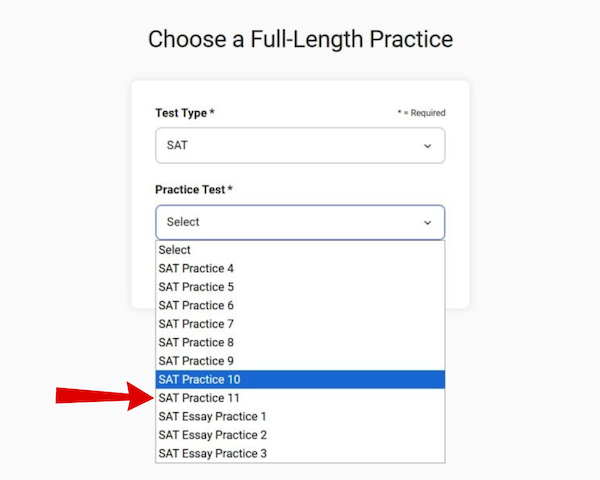
Take the diagnostic:
- In one sitting
- On a Saturday morning (just like the real test)
- With no long breaks
- Using Desmos and an approved calculator
- In a quiet space, with no interruptions
Avoid shortcut “AI diagnostics” that claim to predict your score in 10 questions. They create false confidence and waste precious prep time.
Step 2: Analyze the Score Report (This Is Where Progress Happens)
Your score alone doesn’t matter but your report does.
Look for:
- Patterns, not just mistakes
- Understand WHY the wrong answer looked right in the moment
- Realize WHAT makes this answer 100% wrong
- Question types you miss repeatedly
- Skills that are “low-hanging fruit” (easy to fix, high impact)
For example:
- Lots of grammar errors? That’s a fast win if you have the right resources.
- Math mistakes clustered around specific concepts? Like Algebra or Problem Solving and Data Analysis. Target those.
- Reading errors across the board? That may require a longer-term plan.
Your study schedule should be built around this analysis, not generic daily drills.
Step 3: Build Your 1-Month Plan Around Your Weaknesses
A strong one-month SAT schedule prioritizes:
- Your weakest sections first
- Skills most likely to appear on the test
- Accuracy before speed
- Quality practice over quantity
The goal isn’t to “do everything.”The goal is to fix what’s holding your score down the most.
How do I Get the Most Out of a 1-Month SAT Schedule
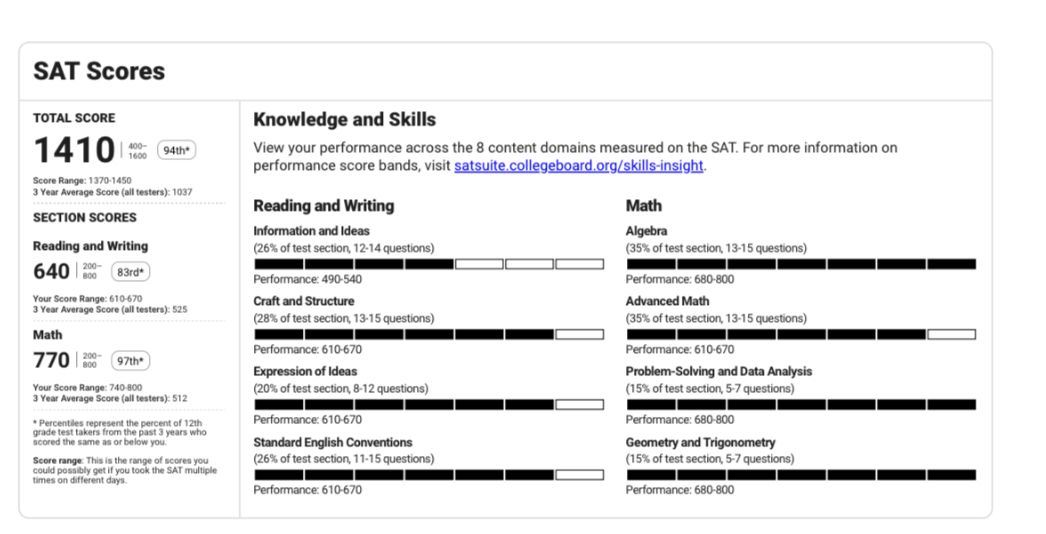
If your practice test or previous test report looks like this, here is your study schedule.
Improving SAT Reading Comprehension
Building strong reading comprehension requires constant, real-time feedback on how well you understand what you're reading. The ideal approach is working with a mentor or tutor (which you can get in the SAT Boost membership and 1:1), but you can also leverage an LLM like ChatGPT effectively.
When using ChatGPT, avoid simply asking "What's the answer?" or "Why is the answer C?" Instead, try this prompt:
"Walk me through this question step by step. Don't give me the answer until I've correctly answered each preliminary question you ask."
This approach provides direct feedback on your ability to make meaning from text -which is our definition of reading comprehension. While it doesn't fully replace a live tutor, a well-trained LLM can come remarkably close.
How to Maximize Your SAT Math Score
First, you need to thoroughly review quadratics, particularly SAT-specific polynomial questions. We cover these comprehensively in our Predictions course (also included in the SAT Boost membership). If you're not ready to join the membership, use the question bank and filter for "Hard" Advanced Math questions.
Here is how to do it:
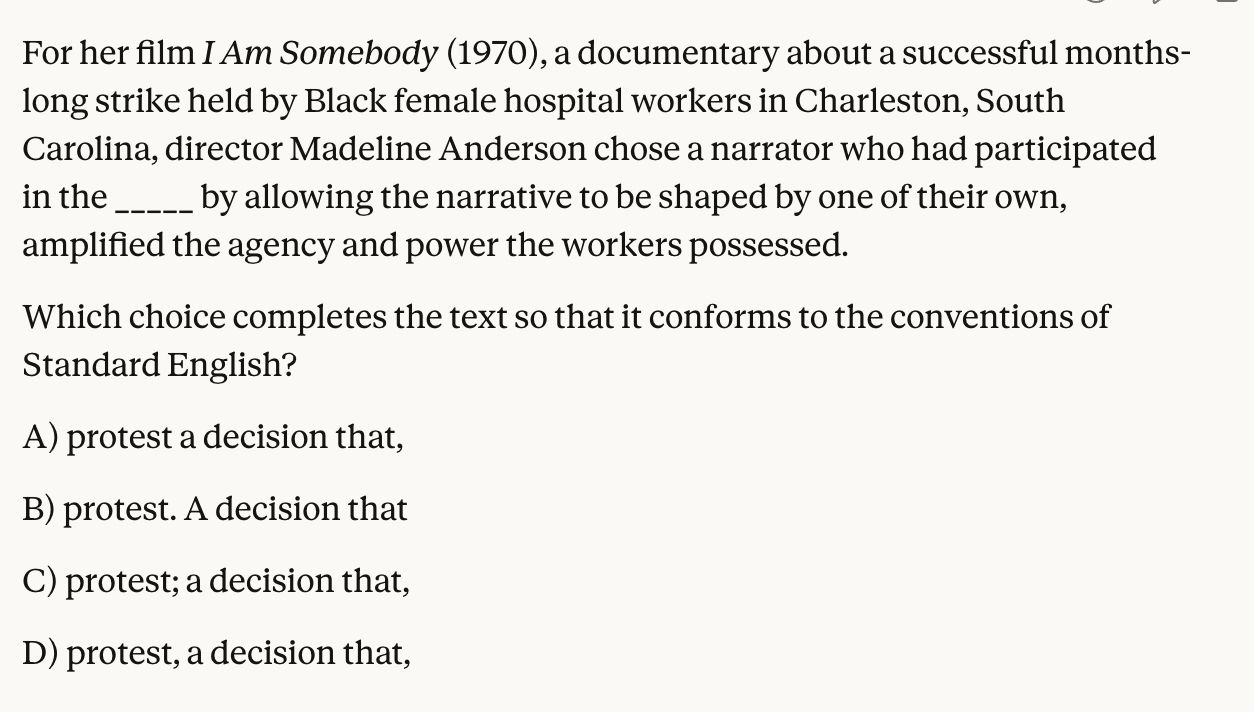
Second, practice the most challenging SAT grammar questions. Focus on understanding why the correct answer is correct based on fundamental grammar rules and logical reasoning—not just memorizing patterns or situational tricks.
Strategic Focus for One-Month SAT Preparation
Given your limited timeframe, we recommend deprioritizing Expression of Ideas and Craft and Structure questions. These question types are highly unpredictable and may not yield proportional score improvements for the time invested.
Instead, concentrate your efforts on:
Reading and Writing:
- Information and Ideas (your weakest area)
- Standard English Conventions (more rule-based and learnable)
Math:
- Push toward a 790-800 (you're already strong here, so incremental gains are achievable)
This strategic approach focuses on the most reliable score improvements you can make in one month.
Always remember to mimic real testing conditions as closely as possible and use Desmos and your calculator during practice. Make sure you review mistakes deeply and thoughtfully, don’t just move on. Focus on low-hanging fruit before harder skills. This is where you can really make an impact. Be honest about your starting point and don’t compare your prep to students scoring far above you. Avoid unrealistic promises and shortcuts. Instead, match your ambition with a strategy that fits your current skill level. Remember, the SAT rewards precision and consistency, not panic.
How to Balance SAT Prep with Schoolwork
March SAT prep should support, not sabotage, your academics. Make sure you keep prep time structured and limited. Protect AP classes and grades, they are very important! Remember to use the March SAT as a learning tool, not an endpoint and plan to revisit SAT prep after AP exams if needed.
Your March SAT success starts with a plan. An intentional plan that starts with a clear SAT schedule, a focused 1-month SAT study plan, and your dedication and focus. Start where you are, stick to the plan, and trust the process! Treat the March SAT as the beginning of a well planned journey, not a final destination.
Take a diagnostic test today and map out your first 7 days. Momentum starts now!